


Sustainability
Building a stronger, more sustainable business
Sustainability is embedded in how we invest, manage and develop assets. It strengthens asset performance and resilience, supports our tenants’ evolving needs and contributes to long-term value creation for investors.
Our focus is on the areas where we can make the greatest impact — climate action, restoring nature, circular economy, responsible procurement and stronger communities — all while building a more resilient and high-performing business.
Highlights at a glance

for Scope 1 and Scope 2 emissions across Australian assets under operational control.

renewable electricity across Australian assets under operational control.

invested through social procurement.

invested with Red Cross and FRRR to support Australian communities.

ranked in GRESB’s global top 10.

in sustainable finance, representing 23% of the debt book.
Our reporting suite
Explore our reports, data and disclosures to understand our sustainability performance, progress and priorities.
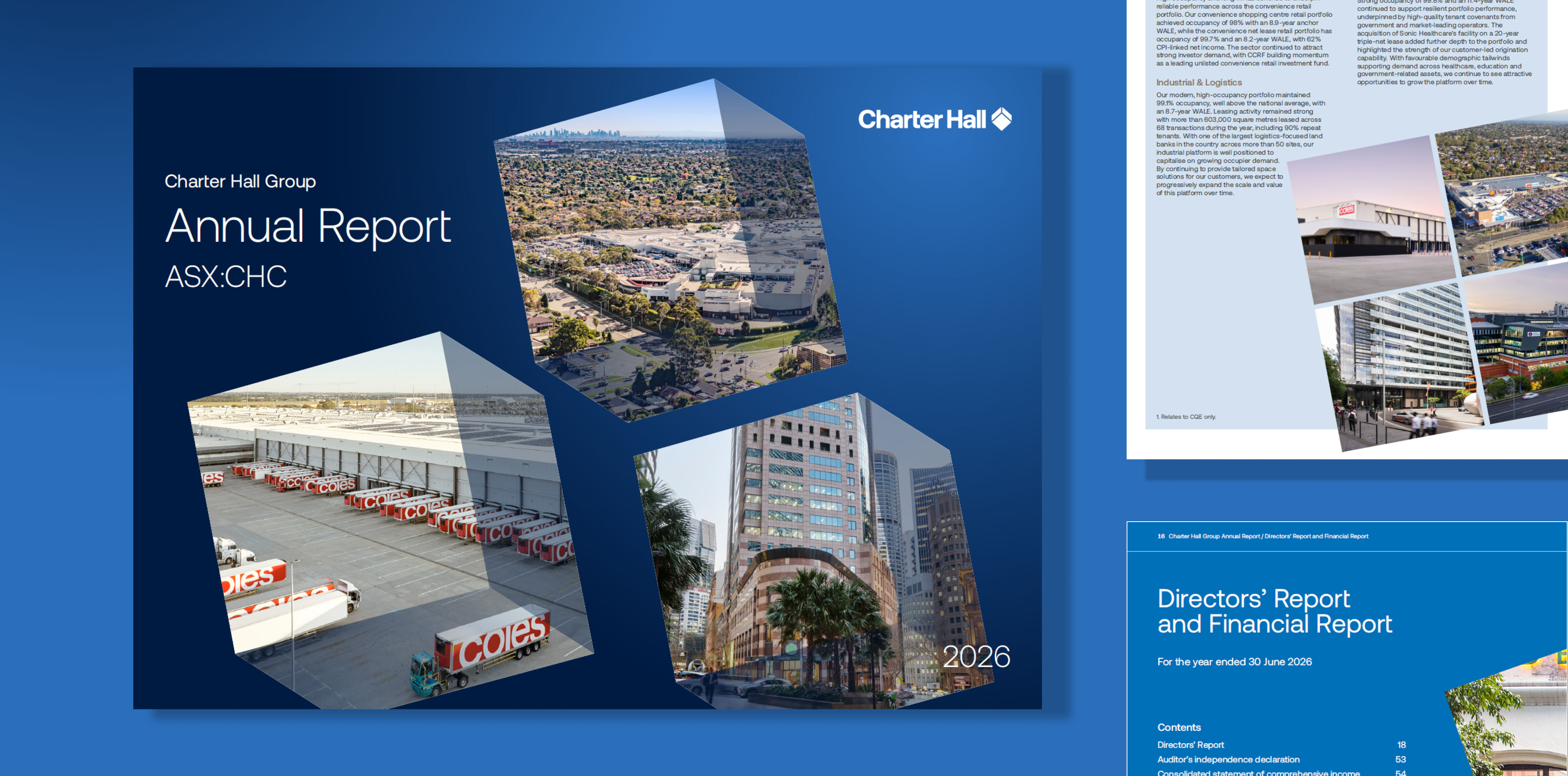
CHC Annual Report
Learn more
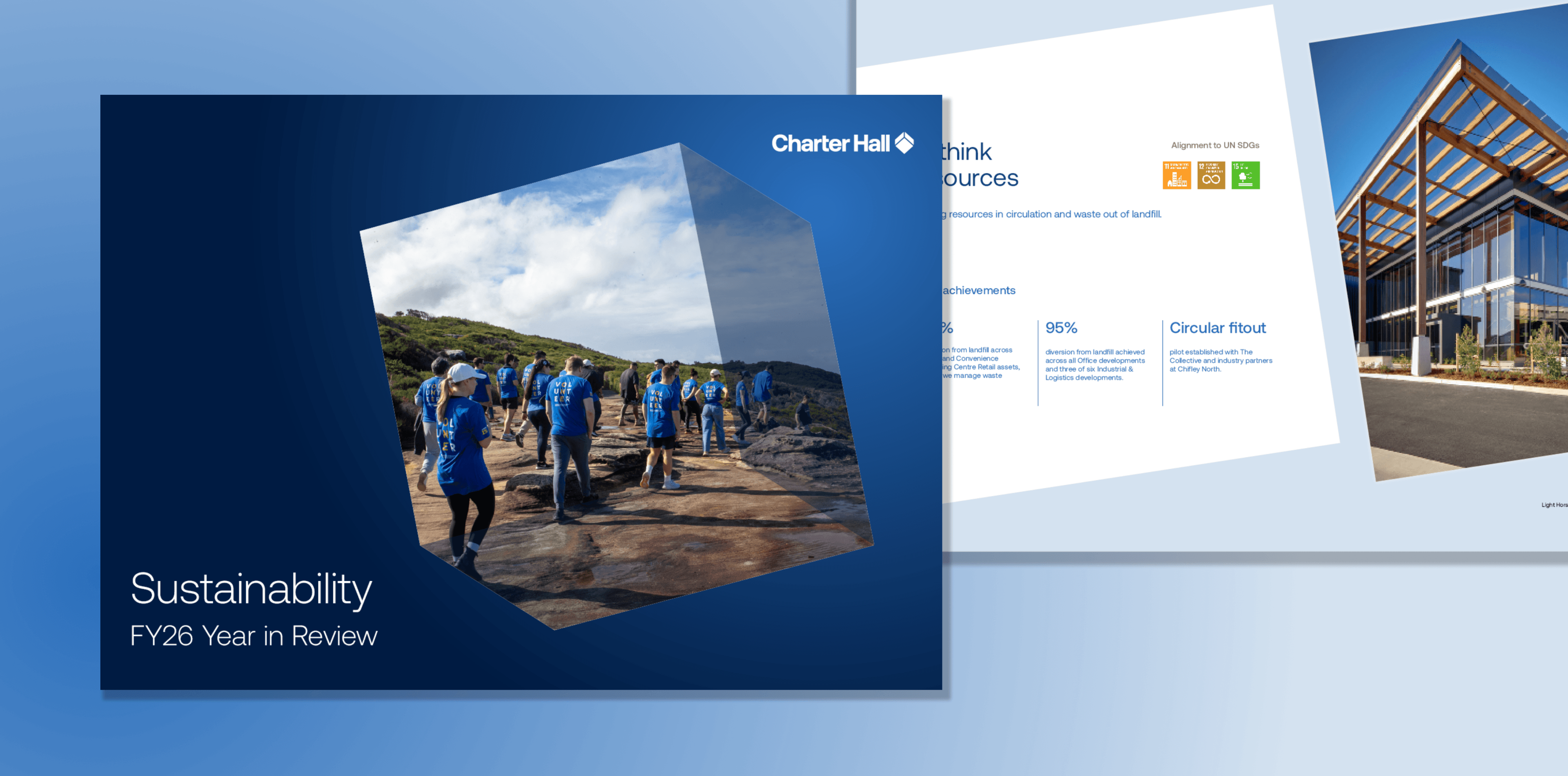
Sustainability FY26 Year in Review
Learn more
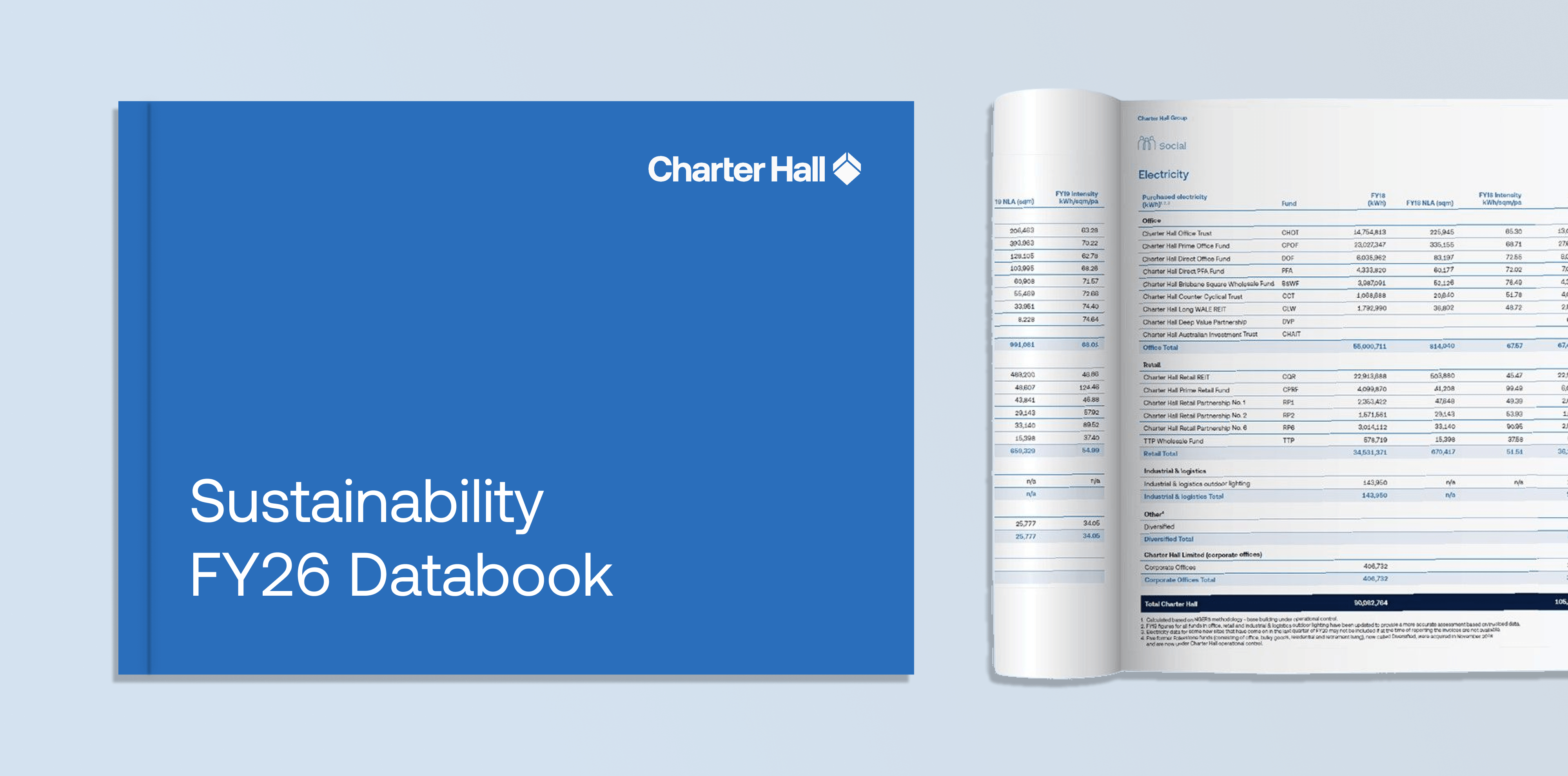
Sustainability FY26 Databook
Learn more
.jpg?sfvrsn=80f578e7_0 "220801_CHARTERHALL_Martinplace_09_0473 (1)")
Modern Slavery Statement
Learn more

Innovate Reconciliation Action Plan
UN Global Contact
2025 Sustainability Report
2024 Sustainability Report
2023 Sustainability Report
2022 Sustainability Report
2021 Sustainability Report
2020 Sustainability Report
2019 Sustainability Report
2018 Sustainability Report
2017 Sustainability Report
2016 Sustainability Report
2015 Sustainability Report
2014 Sustainability Report
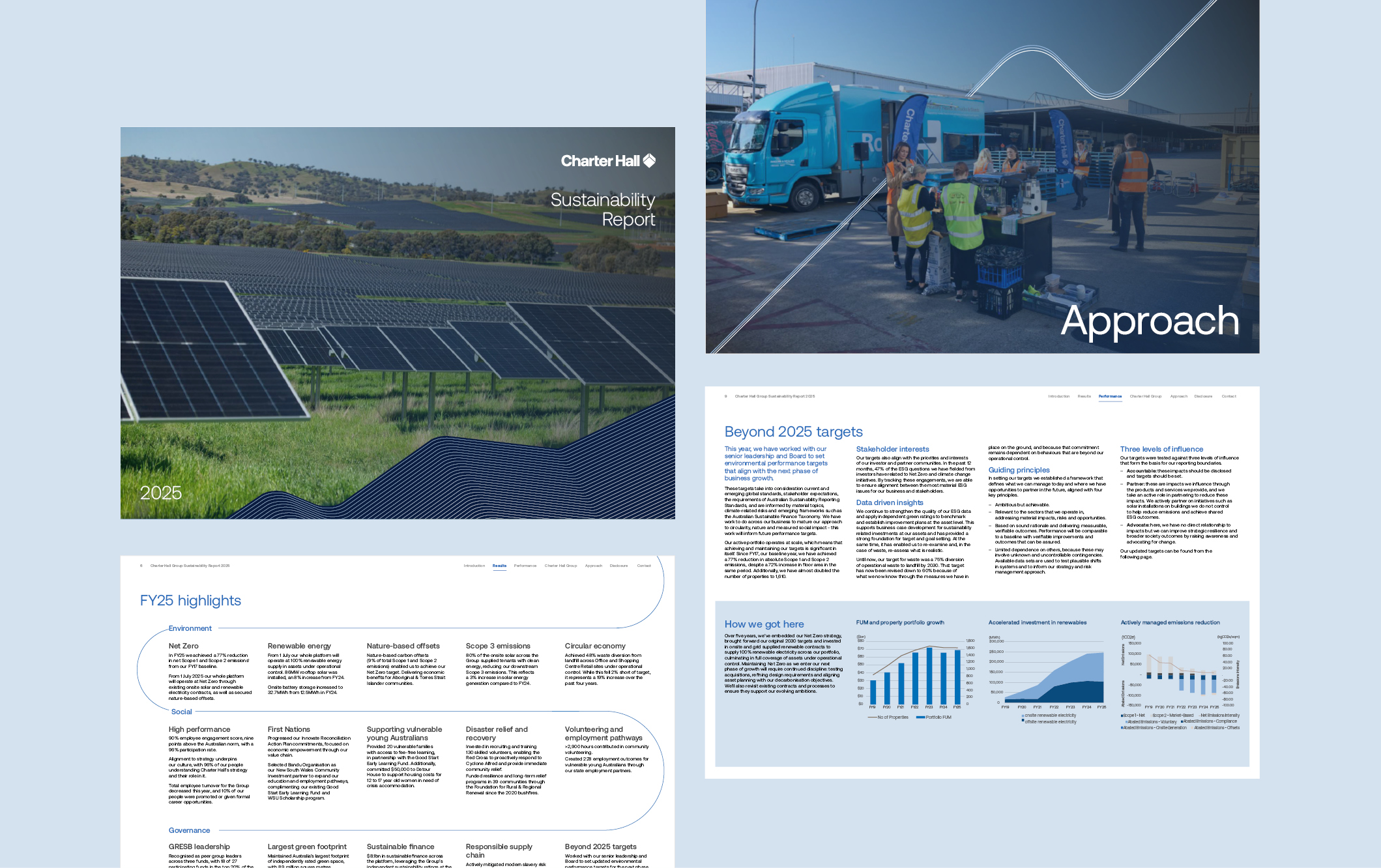
2025 Sustainability Report - Five years of progress
Five years ago, we set our first sustainability targets. Since then, we’ve
accelerated many of them, achieving our targets ahead of schedule, and
deepening our impact.
We’ve gained valuable insights along the way, as we focused on learning,
listening and building a data-informed foundation. That work has delivered
results across multiple fronts – outlined below and explored more fully later
in this report.
Databook
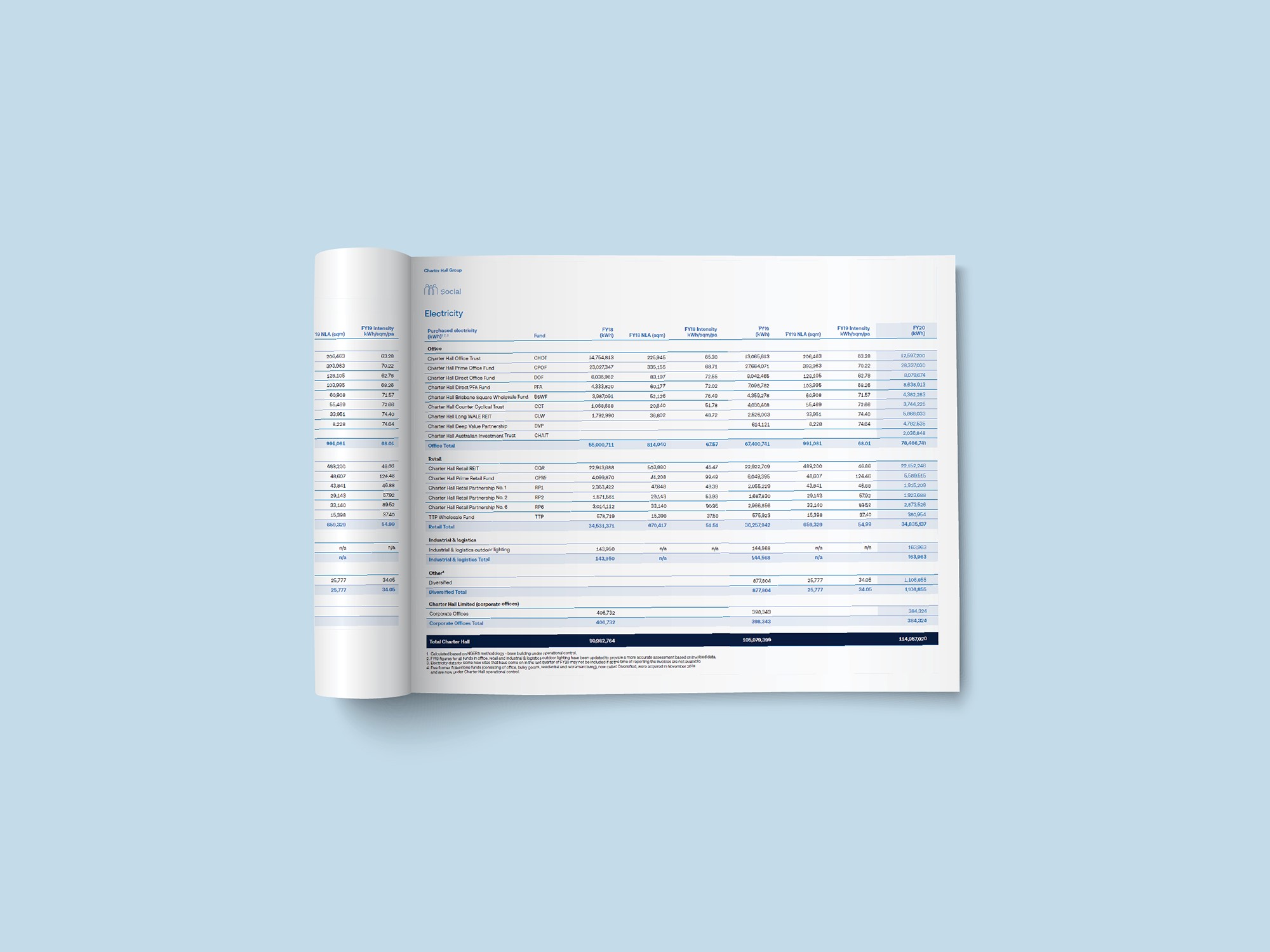
While our Sustainability Report provides an overview of our performance against key metrics, our comprehensive Databook provides all our sustainability performance data for Charter Hall, as well as CLW, CQE and CQR.
Reconciliation Action Plan
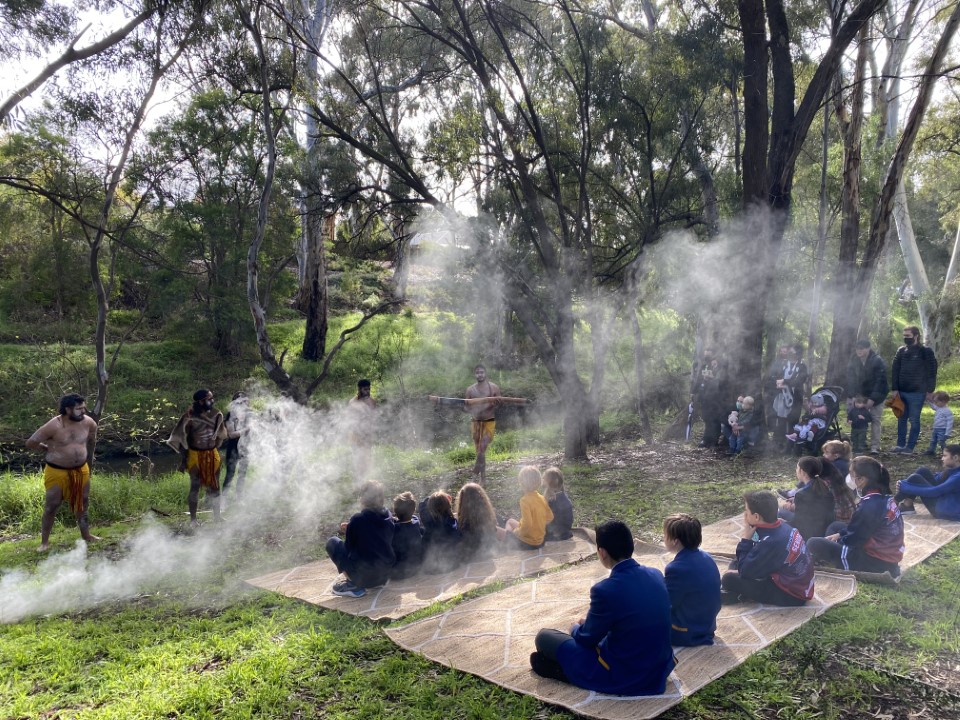
Our Reconciliation Action Plan (RAP) guides us in identifying tangible and substantive initiatives for First Nations peoples, increasing economic equity and supporting First Nations self-determination. We are pleased to share that our Stage Two: Innovate Reconciliation Action Plan (RAP) has been endorsed by Reconciliation Australia.

Modern Slavery Statement
Our consultative approach to managing modern slavery is consistent with previous years. Each of our reporting entities has its own governance structure (including its own Board) that determines decision-making for assets within its portfolio.

-
© Charter Hall Group, 2026.
- Terms of Use
- Privacy Policy
- Complaints Guide

